The Challenge
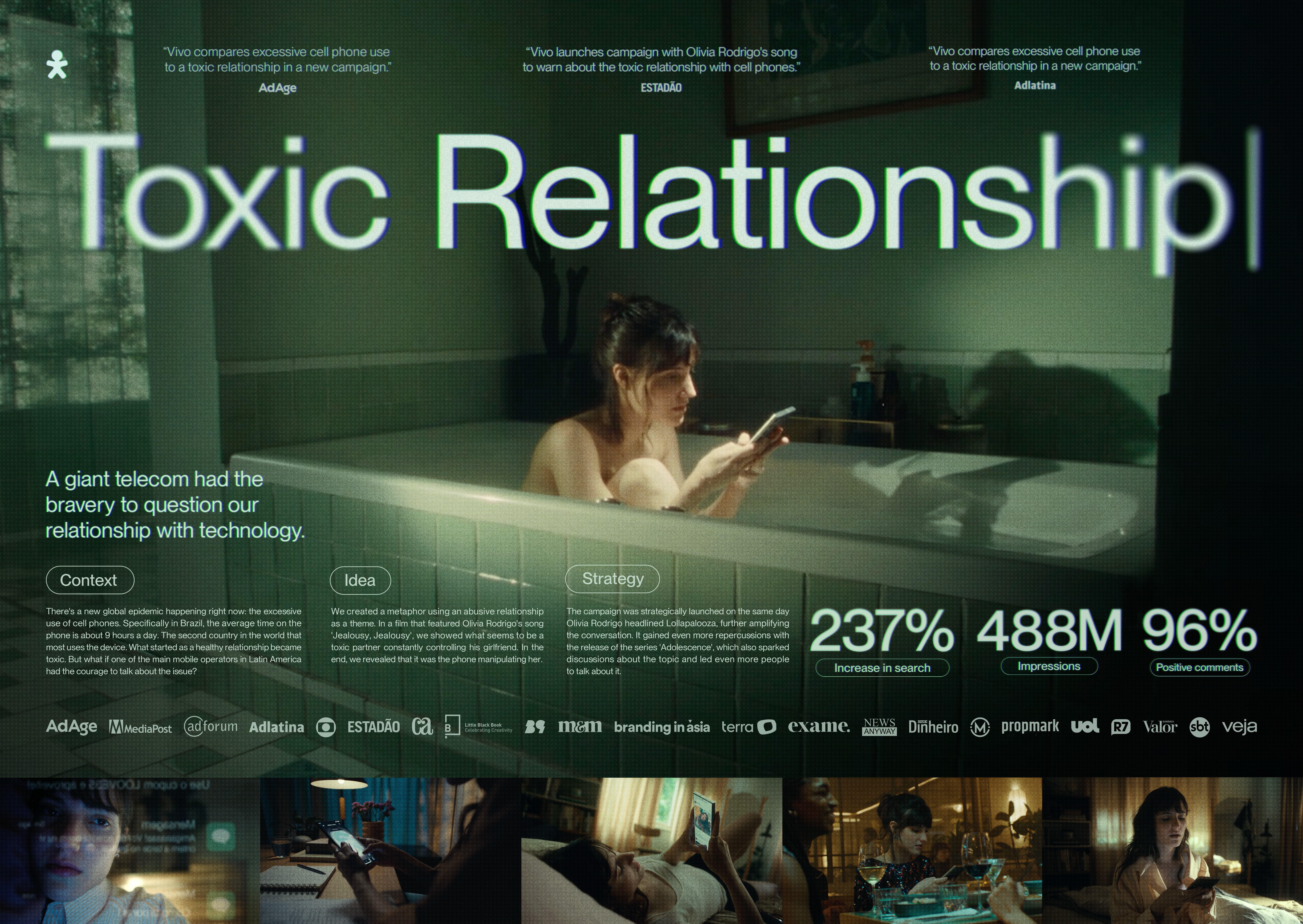
In one of the countries most addicted to mobile use, Vivo launched the "Toxic Relationship" campaign to address the growing mental and emotional impact of excessive screen time. Rather than moralizing, the campaign exposed how patterns of anxiety, control, and dependence have quietly taken hold — ultimately revealing that the source wasn’t a toxic person, but our devices. Launched on March 28, 2025, the campaign combined mass media (TV, DOOH, digital platforms, and social media) with contextual placements (cinema, creators), balancing reach with emotional depth. It debuted the same day Olivia Rodrigo headlined Lollapalooza Brazil, using her song "Jealousy, Jealousy" as a cultural trigger. With over 85 million views and a reach of 66 million, the campaign sparked a national conversation and repositioned Vivo as a leader in digital well-being.
The Solution
The creative idea was to confront a hidden truth: our relationship with our phones has become emotionally damaging. The campaign exposed patterns of control, dependence, and anxiety—behaviors typically associated with toxic relationships—to reveal that the real source was our constant interaction with screens. This unexpected metaphor reframed everyday habits, prompting reflection rather than judgment. Instead of glorifying digital connection, the campaign challenged audiences to question their own behaviors. To build cultural resonance, it featured Olivia Rodrigo’s “Jealousy, Jealousy,” a song about the emotional toll of social media, and launched the same day she headlined Lollapalooza Brazil—amplifying its relevance. By blending brand messaging with public discourse, the idea created space for both personal recognition and collective conversation. Bold yet empathetic, it resonated with younger audiences through tone, soundtrack, and relatable imagery, inviting them to rethink how they use technology in their daily lives.